

Over the past year, 2025 Nicor Gas Innovator Awardee Natural Science has moved from early validation to commercial momentum, advancing technologies for oil spill response, water treatment, and oil and gas processing through Evergreen Climate Innovations’ Early Access Program.
At Evergreen Climate Innovations, we back founders tackling hard industrial problems with technologies that can deliver both environmental and economic value. Natural Science is one of those companies. Through Evergreen’s Early Access Program, in partnership with Nicor Gas, the company has spent the past year building the proof points that matter most to customers, regulators, and commercialization partners.
Natural Science has spent more than a decade developing electromagnetic technologies that separate hydrocarbons from water, and water from hydrocarbons, without chemicals. That work has led to applications across oil spill response, produced water treatment, demulsification, and broader water treatment. But just a year ago, several of the company’s biggest opportunities were still taking shape. Key technologies had not yet reached regulatory approval, commercial traction was still limited, and some of the most promising applications had not yet been proven in the field.
That has changed in a meaningful way –
One of the clearest examples is MagnetAsorb, Natural Science’s patented natural absorbent for oil spill response. In December 2025, the product received EPA approval and was added to the National Contingency Plan list, a critical milestone because federal oil spill coordinators can only use products on that approved list. Since then, Natural Science has expanded conversations with viable customers and stakeholders, including groups in the oil industry, the Coast Guard, and the Army Corps of Engineers.
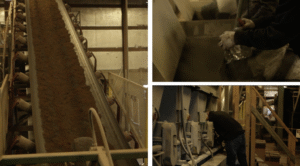 MagnetAbsorb in action.
“Natural Science has made the kind of progress we hope to help accelerate through the Early Access Program,” said Dylan O’Reilly, Program Director of Evergreen’s Early Access Program. “It’s been incredibly exciting and rewarding to witness the team’s hard work and support them through significant milestones as they move from early-stage validation to commercialization.”
The company also made major progress in demulsification, one of the most promising opportunities to emerge from its platform. When Natural Science began working with Evergreen, the team had not yet proven the process in the field. In October 2025, testing in Trinidad using crude slop oil from regional drilling operations reduced water content to less than 2 percent after a single pass through its ramp system. Natural Science is now building a system to process slop oil in Trinidad and forming a joint venture with a Trinidadian oil services company.
Natural Science’s oil spill cleanup technology also gained traction over the past year. The company completed oil cleanup and MagnetAsorb demonstrations attended by oil companies, oil field service providers, and government agencies. Those demonstrations helped move the technology beyond technical validation and into active commercial conversations. At the same time, the company has strengthened its ability to meet demand by building contract manufacturing relationships for key products and tools, an important step toward broader commercialization.
That combination of technical progress and commercial readiness is exactly what the Early Access Program is designed to support.
“This year has been a banner year for Natural Science,” said Arden Warner, Co-founder and Chief Scientist of Natural Science. “Our technology has progressed with the help of Evergreen’s Early Access Program partnership. The program helped us to open new conversations with customers and partners that recognize the value of these technologies in real operating environments.”
For Evergreen, Natural Science’s progress is a strong example of what can happen when promising climate and environmental technologies get the right support at the right stage. The company’s work is addressing real operational pain points across spill response, water treatment, and oil and gas processing, while reducing chemical use and opening new pathways to environmental impact. We’re excited to continue supporting Natural Science as it builds on this momentum.