

Finding? What Finding?
The Trump Administration EPA reversed the Endangerment finding, which says that CO2 is bad for us, and in doing so undercuts a bunch of different regulations related to human health and climate mitigation. Who cares specifically? The coal lobby does; although automakers weren’t pushing for it (even though they complain about the vehicle efficiency standards that this rule is underpinned by).
This is obviously silly since CO2 is indeed bad for us because it drives climate change, but par for the course this year. It will be tied up in court for a while. And while it was billed as a way to reduce regulatory burdens, this move is likely to actually increase that regulatory burden at least in the medium term, because of increased uncertainty (test cases on this topic are already happening). This is because of our unique Federal system: if the Federal government doesn’t regulate something, then that opens the door to states (eg California) to regulate it themselves which could lead to a wacky legal patchwork. Additionally, as long as EPA was regulating emissions, it was hard for public nuisance suits to have achieve standing (eg a company owes the general public money because they are creating a public nuisance by contributing to climate change). As we noted back in July, without this regulatory framework in place, this may not be the case.
And, while the US is backsliding there, the EU is maintaining their standards. Over the longer term, regardless of how the lawsuits play out, this move has the potential to make US industry less competitive globally as they increasingly focus on the US market, which is large, but much smaller than the world.
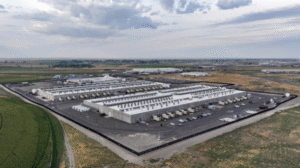 Credit: Jenny Kane, Associated Press file
Paying Up For Data Center Power and Keeping People Happy
Recently, if you are in the business of getting a lot of new data centers built, you have been saying that you are going to pay for the costs of power for your new data centers and the infrastructure required to support it (like Anthropic, and OpenAI, and Microsoft, and Google and Meta. The President also cajoled the companies to do this thing via his “Ratepayer Protection Pledge.”
On one hand, this is good! These companies should indeed for the cost of their new power needs. When I bought a house, I too needed to start paying for the electricity consumed by my house.
On the other hand, it gets complicated pretty quickly. For one, these commitments are not a law, and more importantly, there is not one entity that oversees how this happens, it’s sort of a mishmash between RTOs and State commissions. And while some elements (like procuring new generation) are relatively more straightforward, others (like paying for transmission upgrades) are not – my impression is that to re-allocate those costs, transmission owners will need to change their tariff with FERC to enable the hyperscalers to actually pay for that. It would be good if states approached this uniformly to limit jurisdiction shopping, but then again we live in a federalist system so we know that’s not going to happen.
But I don’t think that’s even the biggest challenge for the hyperscalers. This biggest challenge is that data center pressure on rising electricity prices is an extremely salient issue amongst the public at large… but the relationship between data center expansion and rising utility bills is murky. As we talked about in October, research suggests that some of the biggest drivers on recent electricity price increases are distribution system upgrades, hardening, and wildfire mitigation, and fuel input variability (natural gas prices are up significantly over the last 5 years, as are the turbines themselves), although presumably increased capacity prices and grid upgrades related to increasing peak load will play a larger role going forward (especially where supply is constrained) as well.
But at the end of the day, whether or not the hyperscalers pay full freight for their power related costs (as of course they should), the public at large will not believe that this is happening if their electricity prices continue to rise (whether or not the new data center load is to blame). This is a political messaging problem as well as a challenge in actually building and upgrading new power infrastructure.
Other News
 Credit: Tesla
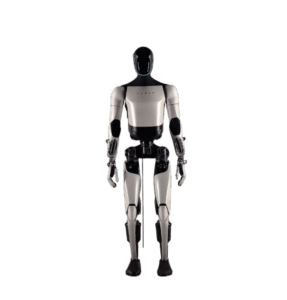
Tesla discontinued two of their premium vehicles, the Model S and Model X, to make space on the production line to build humanoid robots (you can’t make this stuff up!). Musk was recently awarded a new pay incentive package: it incentivizes moonshot growth. Deploying ubiquitous humanoid robots is consistent with moonshot growth; just building some more cars people like is not (although they are still making the popular Model 3 and Model Y and the very large Cybertruck).
 Credit: Honda
Honda is starting to produce electric quadricycles at a plant in Ohio, which is sort of a cross between en ebike and a tiny truck. We have seen a number of startups trying to innovate in this space, but I think this is the first one from a major OEM. These thingies can use bike lanes, and can also usually pull up and park on sidewalks as needed (and not take up parking spaces), so for dense urban locations they are as much about making it easier to fulfill last mile delivery logistics as they are about sustainability.
The Treasury Department released Foreign Entity of Concern (FEOC) guidance for tax credits impacted by OBBBA – CTVC has a good summary.
The Ohio legislature is considering effectively banning renewable energy projects (by putting requirements in place they are unable to comply with) – you can’t make this stuff up!
McKinsey predicts electric vehicle battery recycling will grow from a $2.5B industry in 2025 to $70B in 2040.
BYD is working on 1500 kw “flash” chargers which could add about 12 miles of range in 10 seconds (or a full charge in 4 or 5 minutes). h/t Trucks FOT
The US started a military campaign in Iran recently. The Straight of Hormuz, off Iran’s southern coast, is a global supply chain pinch point, with 20% of global petroleum flowing through it (the vast majority of that is headed for Asia, but oil is a global commodity). My colleague Shashank recently introduced me to the website Marine Traffic that allows you to track the crude oil shipping implications of this conflict in real time.